
Ishan Kumar Anand, Machine Learning, Computer Vision and AI Engineer

Machine Learning / Computer Vision / AI Engineer

I build models that see, and models that imagine. Right now: spotting strokes in radio signals, and turning those signals into brain images.

  • Now ML Engineer at Tiposi
  • Based in San Francisco, California
  • Studied at UC San Diego, MS CS (AI)
or try

Try it The name above forms out of random noise, the same way image generators like Stable Diffusion work. Type your own words and press enter, drag the slider back toward noise, or sweep your cursora finger through the letters.

Scroll to explore ↓

About

Portrait of Ishan Kumar Anand
person 0.99
Machine Learning Engineer

I build machine learning systems that see and that generate. Right now, at Tiposi, I teach models to detect strokes from the radio signals of an antenna helmet, and to turn those signals into 3D brain images. Before that I built controllable text-to-video for a Hollywood visual-effects pipeline, a multilingual voice bot, and cloud infrastructure that had to stay up.

What I work with98 skills · 8 areas

Teaching models to see: find, outline, track and measure what is in an image or video.

  • Object Detection
  • Image Segmentation
  • Image Classification
  • Object Tracking
  • Body & Pose Tracking
  • Depth Estimation
  • Optical Flow
  • Super-Resolution
  • Vision Transformers (ViT)
  • 2D / 3D Scene Understanding
  • Multi-Sensor Fusion
  • Anomaly Detection
  • OpenCV

Models that create new images and video, and models that understand pictures and words together.

  • Diffusion Models
  • Image & Video Generation
  • VQ-VAE
  • GANs
  • Diffusion Transformers
  • Vision-Language Models
  • Multimodal Learning
  • Hugging Face Diffusers
  • Prompt Engineering

Reading the body: radio signals, brain scans and sensor data, checked carefully before anyone relies on them.

  • RF & Microwave Signals
  • 3D Medical Imaging (MRI)
  • MONAI
  • NIfTI
  • ECG & PPG Signals
  • Wearable Sensor Data
  • Time-Series Modeling
  • ROCKET
  • Mamba
  • TabPFN
  • Domain Adaptation
  • Rigorous Validation

Systems that read, speak and reason in many languages, and agents that use tools.

  • Large Language Models
  • Natural Language Processing
  • Multilingual NLP
  • Speech Recognition (ASR)
  • Intent & Slot Filling
  • Dialogue State Tracking
  • Retrieval (RAG)
  • Embeddings & Vector Search
  • Agentic Workflows
  • Tool Calling & MCP
  • LangChain & LangGraph
  • Hugging Face Transformers

Getting a model to learn the right thing, then proving it did.

  • Distributed Training
  • Fine-Tuning (SFT, LoRA)
  • RLHF & DPO
  • Reward Modeling
  • Reinforcement Learning
  • Knowledge Distillation
  • Transfer Learning
  • Evaluation Frameworks
  • Benchmark Design
  • PyTorch
  • TensorFlow
  • JAX
  • scikit-learn
  • NumPy & Pandas

Making models small and fast enough to run for real, on servers or on the device.

  • ONNX Runtime
  • TensorRT
  • TensorRT-LLM
  • vLLM
  • Quantization (INT8, FP8)
  • Model Compression
  • On-Device ML
  • Edge Deployment
  • GPU Optimization
  • Numba
  • Batch Inference
  • Model Serving

Keeping it all running, cheaply and safely, with automatic checks on every change.

  • AWS (EC2, S3, Lambda)
  • Google Cloud
  • Azure
  • Docker
  • Kubernetes
  • Terraform
  • CI/CD & GitHub Actions
  • Canary Rollouts
  • Microservices
  • REST APIs & FastAPI
  • Apache Spark
  • PostgreSQL
  • MLOps
  • Monitoring & Observability

What I write it all in.

  • Python
  • C++
  • CUDA
  • Go
  • Java
  • SQL
  • JavaScript
  • TypeScript
  • Swift
  • Scala
  • R
  • MATLAB
§ 1

Experience

Four jobs, newest first. Each one is a cylinder that turns as you scroll, with its story printed all the way round: the picture shows what the work does, the caption explains it (plain words first, the technical detail underneath), and the numbers beside it are the results. Point at either edge of a cylinder (or tap it on a phone) to roll it by hand, and use the years in the top bar or ← / → to jump around.

Act ITiposiMachine Learning Engineer · Sep 2026 – present

Act I · Now showing · Sep 2026 – now

Tiposi

Machine Learning Engineer. A helmet of antennas sends weak radio signals through the head. I build the models that read those signals to tell whether there is a stroke, and ship them to run on real scans.

Scroll to play ↓

Reading the signalsThe helmet’s antennas take turns sending a weak radio signal through the head while the others listen. Each recording is turned into a spectrum a model can read.raw RF → log spectra · every transmit–receive antenna pair
Spotting a strokeA stroke changes how the signals travel (red lines). The model looks at each scan from 11 different angles and combines them into one verdict.11 spectral + temporal views · PCA–LDA readers · stacked ensembles · 50+ architectures compared
Working on any helmetEvery helmet has its own electronic fingerprint. I removed it so the model works on helmets it has never seen, then compiled it to run three times faster.RF nuisance removal · leave-one-helmet-out AUC 0.82 → 0.91 · one ONNX graph, 11.5 s → 3.5 s per scan
Seeing the brainThe next step: turning the same radio signals into a 3D image of the brain, the kind a doctor normally needs an MRI scanner for.3D FSQ VQ-VAE (42.7 dB reconstruction) · RF mapped into the MRI latent space

In short

  1. 50+model architectures built and compared
  2. 11views of every scan, combined into one verdict
  3. 0.91accuracy score (AUC) on helmets it never trained on, up from 0.82
  4. 3×faster per scan in production, 70% smaller model
  5. 3D MRIbrain images generated from the radio signals
  1. 0+model architectures built and compared
  2. 0views of every scan, combined into one verdict
  3. 0.91accuracy score (AUC) on helmets it never trained on, up from 0.82
  4. 0×faster per scan in production, 70% smaller model
  5. 3D MRIbrain images generated from the radio signals
Act IIViga Entertainment TechnologyAI Engineer · Jan – Jun 2024

Act II · Roll camera · 2024

Viga Entertainment Technology

AI Engineer. Generating video from text for film visual effects, where the character has to stay the same from frame to frame and the edges have to be clean enough for a Hollywood production.

Scroll to play ↓

From pose to pictureGive the model a stick-figure pose (left), a depth map (middle) and a line of text. It generates the frame on the right, starting from pure noise.text-to-video diffusion · conditioned on depth maps + pose skeletons
Same character, every frameThe hard part is keeping the character identical for 200+ frames instead of flickering. Watch the jacket colour settle.LoRA adapters per character · optical-flow-guided denoising · sliding-window temporal attention
Clean cut-outsVisual-effects artists need the character cut out perfectly. Left of the green line: a glowing halo. Right of it: a clean edge.Segment Anything + edge-refinement head · boundary-weighted Dice loss · sub-pixel masks
The resultArtists had to fix 40% less by hand. Built for a Hollywood production; the work later moved to Google AI research.diffusion super-resolution · multi-GPU inference pipeline

In short

  1. 200+frames with one consistent character
  2. sub-pixelclean cut-out edges, no glowing halo
  3. −40%manual fixing needed from artists
  1. 0+frames with one consistent character
  2. sub-pixelclean cut-out edges, no glowing halo
  3. −0%manual fixing needed from artists
Act IIIGnani.aiNLP / ML Engineer · Sep 2022 – Sep 2023

Act III · Roll sound · 2022 – 2023

Gnani.ai

NLP / ML Engineer. A voice bot that answers real phone calls: it has to understand what you mean, remember the conversation, and follow you when you switch languages.

Scroll to play ↓

50,000 calls a dayA voice bot answering real phone calls. The boxes fill in as it works out what the caller wants and remembers the details.dialogue state tracking · intent resolution · slot filling
Switching languagesCallers switch languages mid-sentence; each colour is a different language. The bot follows them, and it handles 16+ languages in all.shared XLM-RoBERTa vocabulary · code-switching accuracy 34% → 91%
Answering fasterI shrank the model from 12 layers to 6 without losing its answers, so it replies in less than half the time.BERT → DistilBERT distillation · ONNX graph optimization · −55% latency
Safer releasesShipping a new version went from two hours to fifteen minutes, with an automatic undo if anything breaks.CI/CD · validation · canary rollout · auto-rollback

In short

  1. 50K+calls a day
  2. 91%accuracy when callers switch language, up from 34%
  3. −55%time to answer
  4. −75%client operating cost
  1. 0K+calls a day
  2. 34%accuracy when callers switch language, up from 34%
  3. −0%time to answer
  4. −0%client operating cost
Act IVSyncronAssociate Software Development Engineer · Jan – Sep 2022

Act IV · Build the stage · 2022

Syncron

Associate Software Development Engineer. The cloud servers underneath everything else: making them cheaper, faster and harder to break.

Scroll to play ↓

Finding idle serversSome cloud servers were running but doing nothing (red). I found them, shut them down and grouped the rest into tiers.AWS resource audit · tiered architecture · −11% compute cost
Catching driftThe test environment had quietly drifted away from the live one (≠). I built a check that catches the difference before it breaks the live system.staging ↔︎ production parity checker · CloudWatch + Terraform · −73% incidents
Faster and cheaperThe result: data moved 37% faster, for 11% less money.Go microservices · Terraform · fault-tolerant AWS infrastructure

In short

  1. −11%cloud bill
  2. −73%live incidents caused by the test setup
  3. +37%data moved per second
  1. −0%cloud bill
  2. −0%live incidents caused by the test setup
  3. +0%data moved per second

Cut. Print.

Next reel: the projects.

01Tiny Recursive ModelText-to-image · Oct 2025 – Jan 2026

Project 01 · Smaller.

Tiny Recursive Model

An image generator that turns a sentence into a picture, built from one small block reused in a loop instead of a huge stack of layers.

Scroll to play ↓

How big is too big?Each dot is a million parameters, the numbers a model learns. A standard image generator has about 700 million. How few would still work?baseline: Diffusion Transformer, 700M+ parameters
One block, on repeatTwenty-seven million. One small block runs in a loop, and the picture in the middle gets clearer on every pass.shared-weight recursive transformer · learnable per-pass residual scale · fused text + image latents
Cheap to trainSmall enough to train from scratch in 18 hours on a single GPU.pretrained text encoders · latent image autoencoder · 1 × A100

In short

  1. 27Mparameters, versus 700M+ in a standard model
  2. 1shared block, reused on every pass
  3. 18hto train, on a single A100 GPU
  1. 700Mparameters, versus 700M+ in a standard model
  2. 0shared block, reused on every pass
  3. 0hto train, on a single A100 GPU
Code ↗︎
02Diffusion TransformerText-to-image · May – Sep 2025

Project 02 · Three readers

Diffusion Transformer

A text-to-image generator where three different language models (GPT-Neo, T5 and CLIP) read your sentence and steer the picture together.

Scroll to play ↓

From noise to pictureThe picture starts as random noise and is cleaned up over 50 steps. Three language models read your sentence and steer every step.GPT-Neo + T5 + CLIP text encoders · Deep Compression Autoencoder latents
Telling it the timeEach block needs to know which step it is on. I passed that in as a simple scale and shift (γ, β), 70% cheaper than the usual way.sinusoidal timestep embedding · FiLM modulation instead of cross-attention
Learning from three scoresIt learns from three scores at once: how much noise is left, how good the image looks, and how realistic it is overall.hybrid loss: denoising + perceptual + Inception

In short

  1. 3language models reading the prompt
  2. −70%compute for the timing signal, versus the usual method
  3. 3 scoreslearned from at once: noise, looks, realism
  1. 0language models reading the prompt
  2. −0%compute for the timing signal, versus the usual method
  3. 3 scoreslearned from at once: noise, looks, realism
Code ↗︎
03Hybrid VQ-VAEText-to-image · No diffusion

Project 03 · No noise

Hybrid VQ-VAE

Text-to-image without the step-by-step noise cleaning: the model writes an image the way a language model writes a sentence.

Scroll to play ↓

Images as puzzle piecesFirst the model learns a small set of image tokens, like puzzle pieces. Any picture can then be written as a grid of them.scale-invariant VQ-VAE · discrete codebook
Writing an imageThen a transformer writes those tokens one by one, straight from your sentence, the way a language model writes words. No noise-cleaning loop.decoder-only transformer · text embeddings → image tokens
Deciding what mattersGates inside the model (the bars on the left) decide how much each part of its memory counts for the next token.gated attention · optional hyper-connections

In short

  1. tokensevery image written as a grid of learned pieces
  2. 0noise-cleaning steps: the image is written token by token
  3. gatedattention picks what matters for each token
  1. tokensevery image written as a grid of learned pieces
  2. 50noise-cleaning steps: the image is written token by token
  3. gatedattention picks what matters for each token
Code ↗︎
04Self-Driving Motion PredictionAutonomous driving · Apr – Jun 2025

Project 04 · What next?

Self-Driving Motion Prediction

A self-driving car has to guess where every car around it is about to go. This model makes those guesses, trained on the Argoverse 2 dataset.

Scroll to play ↓

Where cars have beenA bird’s-eye view of a junction. Dotted trails show where each car has just been; the green car is the one being predicted.Argoverse 2 · agent histories + map lanes
Several possible futuresThe model draws several possible paths, each with a probability, while paying attention to the other cars (coloured lines) and the lanes (circles).hybrid encoder–decoder · multimodal attention, vehicle–vehicle and vehicle–map
How close it gotWhite is what really happened; red is the error. My version brought its best guess 15% closer.minADE / minFDE improved 15%

In short

  1. every carforecast together, not one at a time
  2. severalpossible futures per car, each with a probability
  3. +15%more accurate (minADE / minFDE)
  1. every carforecast together, not one at a time
  2. severalpossible futures per car, each with a probability
  3. +0%more accurate (minADE / minFDE)
Code ↗︎
05Video GenerationVideo prediction · Flowing MNIST

Project 05 · Keep it moving

Video Generation

Show a model a few frames of moving handwritten digits and ask it to continue the video. Three approaches, each sharper than the last.

Scroll to play ↓

First try: blurryFour real frames on the left, four predicted on the right. The first approach (ConvLSTM) blurs more with every frame it predicts.ConvLSTM sequence baseline · Flowing MNIST
Sharper edgesA vision transformer, trained to care about how the picture looks, brings the edges back.ViT · linear + up-conv decoders · MSE + VGG perceptual loss
Steady framesA VQ-VAE, which works with a fixed set of image tokens, keeps each frame consistent with the last.VQ-VAE discrete latents · better temporal consistency

In short

  1. ConvLSTMfirst try: gets the motion, but blurs
  2. ViTvision transformer, trained to care how frames look
  3. VQ-VAEworks in tokens, keeps frames consistent
  1. ConvLSTMfirst try: gets the motion, but blurs
  2. ViTvision transformer, trained to care how frames look
  3. VQ-VAEworks in tokens, keeps frames consistent
Code ↗︎

That’s a wrap.

Below: one you can play with yourself.

Play

Your turn

Move your mouse around inside the box.Tap “Steer with your finger”, then drag inside the box. The model tries to guess where you go next, the same idea as Project 04.

Move your cursor in here ↗︎Running on autopilot
§ 3

Peer review

From the people who had to work with me. Point atTap a name to read their review.

Have worked with Ishan on a generative AI project. Ishan was the lead AI engineer. He contributed to the project with a lot of passion and enthusiasm. He is curious about his field and he dedicated himself to learning new skills and reading numerous research papers and implementing them in the project. He learnt generative AI tools like ComfyUI and Automatic1111 within a matter of few days and even helped the rest of the team to get to the pace. He is a good team player and led the team really well. The team was on point with their deliveries and deadlines. Hope to work with you again, Ishan :)

§ 4

Research & education

IEEE International Conference on Contemporary Computing and Communications (InC4) · 2023

Brain Tumor Detection Using Deep Learning Model

Joel Menachery, Ishan Kumar Anand, Michael Moses Thiruthuvanathan

We compared four image-recognition networks, fine-tuned with transfer learning, for telling MRI scans with a brain tumor apart from scans without one, to find the most accurate and efficient option for early detection.

Read the abstract

Brain tumor is a life-threatening disease that can disrupt normal brain functioning and have a significant impact on a patient's quality of life. Early detection and diagnosis are crucial for effective treatment. In recent years, deep learning techniques for image analysis and detection have played a vital role in the medical field, supplying more accurate and reliable results. Segmentation, the process of distinguishing between normal and abnormal brain cells or tissues, is a critical step in the detection of brain tumors. In this research, we aim to investigate various techniques for brain tumor detection and segmentation using Magnetic Resonance Imaging (MRI) images. The detection process begins by analyzing the symmetric and asymmetric shape of the brain to identify abnormalities. We will then classify the cells as either Tumored or non-Tumored. This research is aimed at finding a more accurate and efficient method for detecting brain tumors. Four Keras models are compared side by side to find out the best deep learning model for providing a suitable outcome. The models are ResNet50, DenseNet201, Inception V3 and MobileNet. These models gave training accuracy of 85.30%, 78%, 78%, and 77.12% respectively.
ResNet5085.30
DenseNet20178.00
Inception V378.00
MobileNet77.12
Results Training accuracy (%) of the four networks compared in the paper.
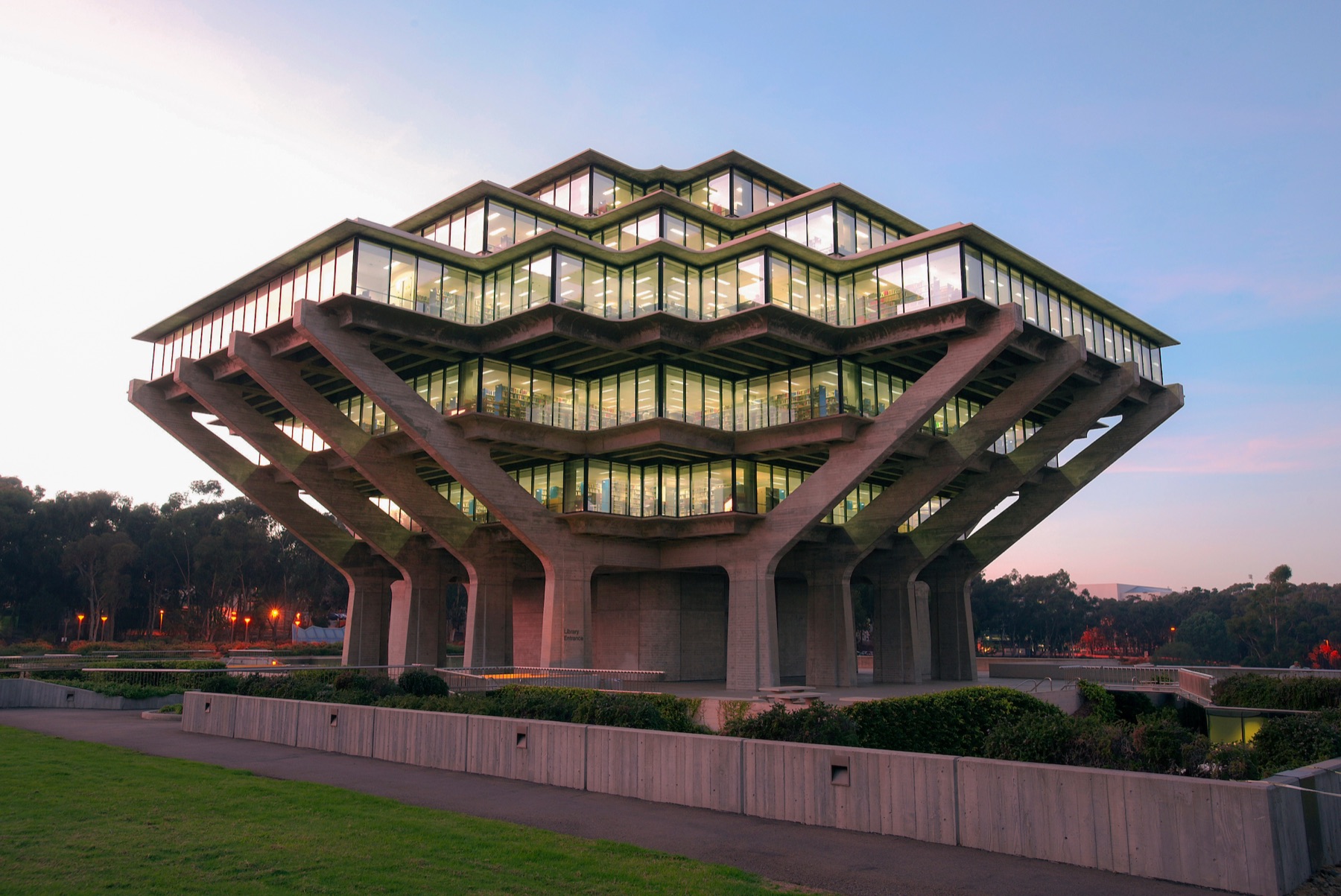
Geisel Library at UC San Diego at dusk
Geisel Library, UC San Diego

2024 to 2026 · San Diego, California

University of California, San Diego

MS in Computer Science, Artificial Intelligence GPA 3.75 / 4.0

Deep Learning · Probabilistic Reasoning & Learning · Advanced Machine Learning · Computer Vision · Natural Language Processing · Recommender Systems & Web Mining · Introduction to Robotics · Operating Systems

2018 to 2022 · Bangalore, India

Christ University

BTech in Computer Science and Engineering, Honours in Artificial Intelligence GPA 3.87 / 4.0

Machine Learning · Artificial Intelligence · Data Structures & Algorithms · Computer Architecture · Operating Systems · Database Management Systems · Computer Networks · Internet of Things · Robotics Process and Automation

Appendix

Off the clock

Things I made because I wanted them to exist.

Tile Burst

A tile puzzle game I built and shipped to the App Store and Google Play. Run your mouse overTap or drag across the squares above: fill a whole row and it bursts.

HeartWise

A real-time 3D heart visualizer. Enter a heart rate and an anatomical heart beats at it, with the ECG trace in sync and the zone labelled resting, moderate or intense.

Back to top